
Whitetail Deer Anatomy, Vital Organ Geometry & Ethical Shot Placement
Whitetail deer vital organs—specifically the heart and lungs—occupy an 8 to 10-inch diameter thoracic cavity behind the front shoulder. Terminal bowhunting and firearm lethality requires angling shots to pierce both pleural cavities while avoiding heavy scapula and humerus bone structures.
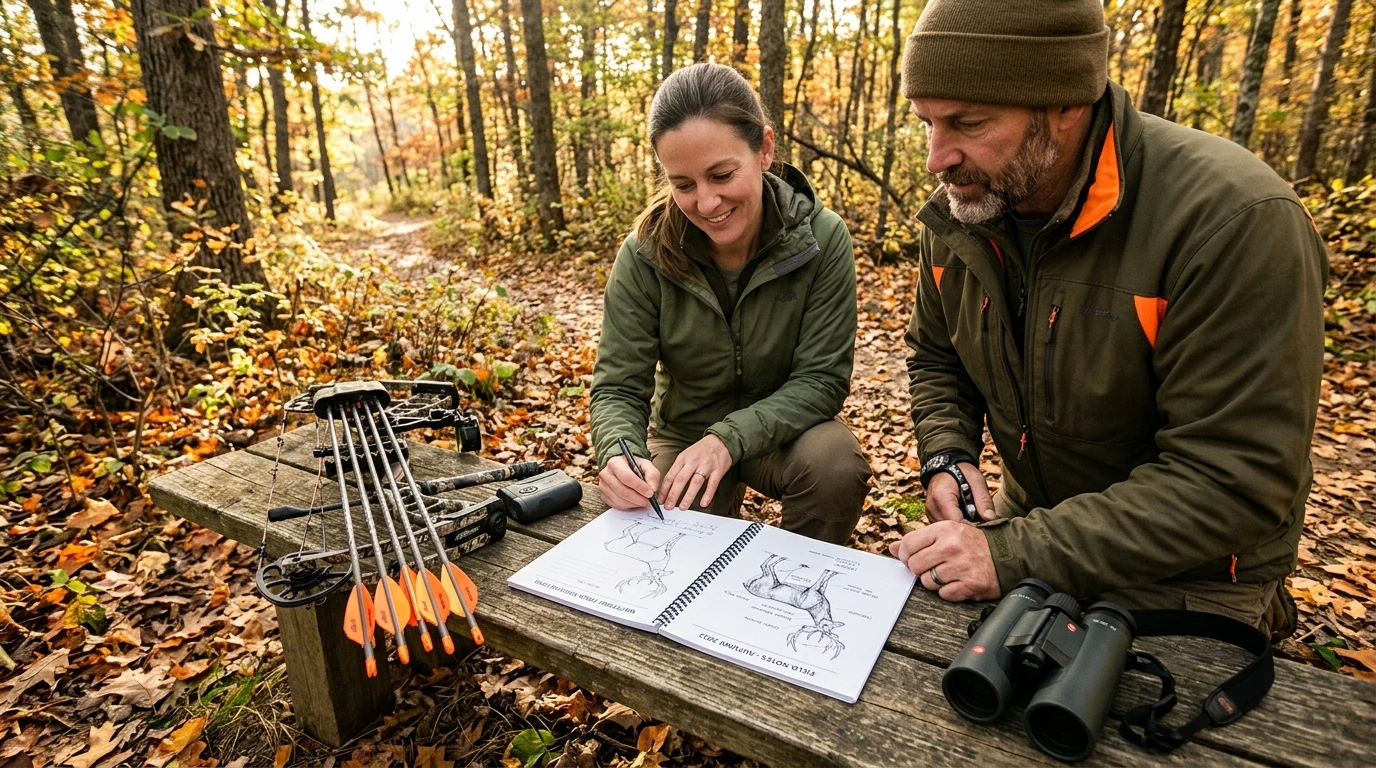
Interactive Whitetail Anatomy Viewer: Broadside, Quartering & Elevated Treestand Angles
Double Lung Pass-Through
Maximum ethical terminal shock. Penetrating both pleural cavities causes immediate bilateral pneumothorax and rapid arterial hemorrhage.
Where Are Whitetail Deer Vitals Located and What is the Lethal Target Zone?
When hunting Whitetail Deer (Odocoileus virginianus), the target area is centered on the Thoracic Vital Cavity, measuring 8 to 10 inches in diameter directly behind the front shoulder. An ethical harvest prioritizes a Double Lung Pass-Through to collapse pleural respiration instantly, while a direct strike to the Cardiac Ventricle Target triggers fatal arterial pressure drop within 10 to 30 seconds.
Hunters must evaluate presentation angles carefully: a Quartering Away Shot creates the most forgiving vital channel by directing the projectile forward into the vitals while bypassing heavy shoulder bone. Conversely, a Quartering Toward Shot introduces severe risk of Scapula Shoulder Blade Deflection, which frequently halts arrow penetration. When shooting from an Elevated Treestand 20ft Down-Angle, sportsmen must aim higher on the entrance side so the downward trajectory exits through the lower opposite thoracic wall.
Terminal Arrow Penetration, Kinetic Energy & Bone Avoidance Dynamics
Ethical big game lethality is governed by momentum and terminal Kinetic Energy (ft-lbs). A 450-grain arrow moving at 265 fps generates approximately 70 ft-lbs of energy, sufficient for rib penetration but susceptible to stoppage if impacting the heavy scapular ridge. Sportsmen should consult our centralized New Jersey Woods and Water field intelligence hub for comprehensive trajectory tools.
Always confirm current season dates with our guide to NJ deer hunting seasons and zone regulations and review statutory weapon restrictions under legal shotgun and muzzleloader hunting regulations before going afield.
Blood Trailing Telemetry: Frothy Pink Arterial Blood vs Liver and Paunch Sign
Frothy Pink Aerated Blood
High volume, sprayed on shrubs and ground at shoulder level. Buck rarely travels beyond 50 yards. Immediate tracking authorized.
Dark Red Rhythmic Spurts
Rapid pooling near impact site with pulsing spray patterns. buck typically bounds violently before expiring in 15–30 seconds.
Dark Crimson Dense Blood
Steady dripping without air bubbles. Animal walks slowly with arched back. Mandatory 4-hour delay before recovery.
Watery Green / Foul Odor
Partially digested matter with sparse blood. Animal beds down quickly. Back out silently and wait 8–12 hours before trailing.
Boone & Crockett Antler Scoring Engine & Venison Yield Calculator
Calculate official trophy rack metrics under Boone and Crockett Club and Pope and Young Club scoring guidelines. Our scoring engine computes both Gross Antler Score and Net Antler Score after symmetry deductions, incorporating Inside Spread Credit, Main Beam Length, tine measurements (G1 Brow Tine, G2 Tine, G3 Tine, and G4 Tine), and four circumference stations (H1-H4 Circumference).
For harvest processing, input the deer's Field Dressed Weight to calculate realistic Boneless Venison Yield (35%) and optimize your ground venison recipe with the ideal Pork Fat Blending Ratio.
Whitetail Antler Trophy Scoring Calculator
Compute official Boone & Crockett and Pope & Young gross and net scores with symmetry deductions.
Whitetail Venison Yield & Sausage Fat Blending Calculator
Estimate clean boneless meat recovery from field-dressed carcass weight and calculate exact pork fat ratios for sausage and burger grinds.
1. Carcass Meat Recovery (TC-06)
2. Sausage & Burger Fat Blending (TC-07)
Formula: Lean / (1 - Fat%) - Lean = 20 / 0.80 - 20 = 5.0 lbs.
Frequently Asked Questions About Whitetail Deer Shot Placement
01Where should you aim on a whitetail deer from a 20-foot elevated treestand?
From a 20-foot elevated treestand at 20 yards, the downward angle is approximately 30 degrees. Aim about one-third of the way up the deer's body and 3 to 4 inches higher on the entrance side than a flat ground shot. This ensures the projectile exits low through the opposite lower lung and heart, producing a prominent low-exit blood trail.
02Why is a quartering-away angle considered the most ethical shot in bowhunting?
A quartering-away angle exposes the entire thoracic vital cavity while shielding the heart and lungs behind the deer's heavy front shoulder blade (scapula). An arrow entering behind the last rib angles cleanly through the liver, lungs, and heart into the off-side shoulder pocket without encountering dense bone on entry.
03What is the difference between arterial lung blood and liver blood on a trail?
Double-lung arterial blood is bright, light pink with extensive frothy air bubbles sprayed on surrounding brush at chest height. Liver blood is deep dark crimson, thick, and typically pools lower on the ground without froth. Liver hits require a mandatory 4-hour delay before tracking to prevent pushing the animal.
04Can an arrow penetrate a whitetail deer's shoulder blade (scapula)?
While high-momentum heavy arrows (500+ grains) with cut-on-contact fixed-blade broadheads can breach the thinner rear blade of the scapula, striking the thick forward spine or shoulder joint of the humerus almost always results in arrow deflection, shallow penetration, and animal survival. Hunters should always aim 2 to 3 inches behind the shoulder crease.